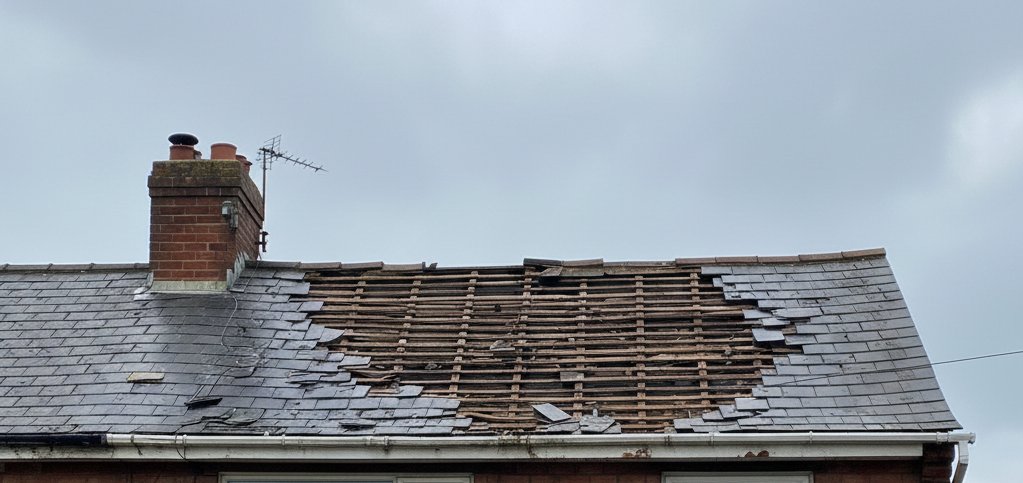
After strong winds, heavy rain and bad weather, it is always worth checking your roof for signs of damage. Storm-related roofing problems are not always obvious straight away, and in many cases a small issue can quickly turn into a much bigger repair if it is left too long.
For homeowners in Bradford, Halifax and surrounding areas, stormy weather can affect tiles, slates, lead flashing, chimneys and guttering. The good news is that there are often visible warning signs you can look out for from ground level before the problem gets worse.
Check for Slipped or Missing Tiles and Slates
One of the most common signs of storm damage is slipped, cracked or missing roof coverings. Strong winds can loosen slates and tiles, especially on older roofs or areas where fixings have already weakened over time.
Signs to look for include:
- Gaps in the roof covering
- Uneven lines across the roof
- Slipped slates or tiles
- Broken pieces on the ground after bad weather
Even one missing tile can allow water to get into the roof structure, so it is always worth acting quickly if something looks out of place.
Look for Guttering Problems After Heavy Rain
Stormy weather can also affect guttering and downpipes. Overflowing water, loose joints, sagging sections or blockages can all cause water to spill where it should not.
You may notice:
- Water pouring over the side of gutters
- Damp marks on external walls
- Joints leaking during rainfall
- Debris collected in the guttering
In some cases, what appears to be a roof leak may actually be caused by damaged or blocked guttering.
Pay Attention to Chimneys and Flashing
Chimneys and roof junctions are some of the most exposed parts of a roof. Lead flashing can lift, crack or fail over time, and heavy rain can then allow water to track in around these areas.
Common warning signs include:
- Staining near chimney breasts
- Visible gaps around flashing
- Cracked mortar on the chimney
- Damp patches near internal wall junctions
Why Flashing Matters
Lead flashing is designed to protect the joints where the roof meets a wall or chimney. If it becomes damaged or poorly sealed, water can find its way in surprisingly quickly during bad weather.
Watch for Internal Signs of Water Ingress
Sometimes the most obvious sign of storm damage is inside the house rather than outside. If you notice damp patches, ceiling stains or discolouration after bad weather, there may be water getting in through the roof.
Internal warning signs include:
- Brown or yellow water marks on ceilings
- Damp patches on upper walls
- Peeling paint near roof level
- A musty smell in loft spaces or upper rooms
These signs should not be ignored, especially if they appear shortly after wind or heavy rain.
Check from the Ground, Not from the Roof
If you suspect storm damage, the safest first step is to carry out a simple ground-level check. Walk around the property, look up at the roofline and note anything unusual. Binoculars can help if you need a closer look, but it is always best to avoid climbing onto the roof yourself.
A simple check can help you spot:
- Slipped or broken coverings
- Overflowing gutters
- Visible chimney damage
- Loose ridge or verge details
- Staining inside the property
Pro Tip: Storm damage is not always dramatic. In many cases, the problem starts with one slipped slate, one cracked tile or one weak flashing detail. Catching it early can make a big difference to the repair needed.
Key Takeaways
- Storm damage can affect tiles, slates, flashing, chimneys and guttering
- Slipped or missing coverings should always be taken seriously
- Overflowing gutters can also point to a roofing issue
- Internal damp patches are often an early warning sign
- A simple ground-level check after bad weather can help spot issues early
If you think your roof may have been affected by stormy weather, Crossley Roofing can help with roofing repairs, leadwork, chimney repairs and guttering work across Bradford, Halifax and surrounding areas.